
Better Ways to Read the Bible
Zach Lambert
Paperback, Ebook, Audiobook, 216 pages.
Published by Bravo Press, August 2025..
Buy it here.
“I am not willing to concede the Bible to those who wield it like a weapon.”
–Zach Lambert
Slavery. The Crusades. White Supremacy. The Spanish Inquisition. Colonization. Witch Trials. Racism. Sexism. Exclusion and Oppression.
Scripture has been used to cause harm for centuries. Unfortunately, many of the interpretive approaches used to justify those actions are still employed today. And many of us don’t even realize it.
We all come to the Bible with set ideas and beliefs about it and the God it speaks about. We read Scripture through these lenses of understanding. But what if our lenses are wrong? What if we’re reading the Bible through a distorted and even filthy filter?
Pastor and author Zach Lambert seeks to identify harmful lenses and point us toward more Christ-like ways to read Scripture that will bring life and wholeness to us both individually and communally.
The book has two main sections: harmful lenses and better lenses. Each lens gets its own chapter filled with stories, insights, biblical and historical references.
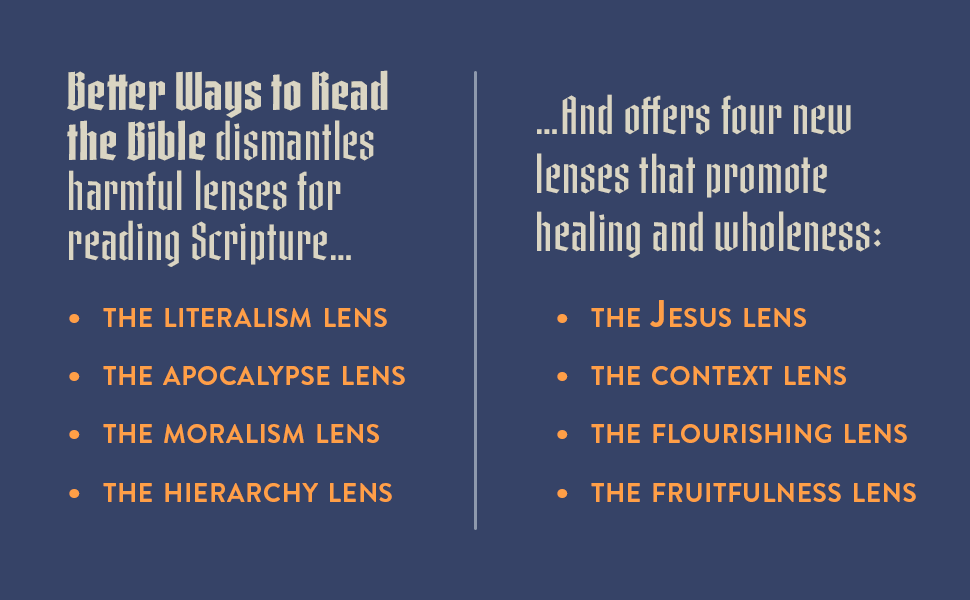
I used the word “lens” here many times, not just because the author does, but because there is an important distinction between a lens and an interpretation. Interpretations are often related to a specific passage or application of Scripture. Lenses, however, apply holistically to all that you read or receive about a subject. They are your go-to understandings of what is true and how you see everything.
Why I Recommend It:
How we see God affects how we see ourselves and others. It affects how we engage the world around us. If the Bible is the main way we get to know God, we should be diligent to get it right, to see and understand it in a way that closely reflects Christ.
This book offers a great framework for reading Scripture with consistency in ways that align with the heart and character of God. I recommend it for anyone who is serious about knowing God and understanding his will.
I loved this book. It’s easy to read. The tone is humble, yet confident, gracious and life-giving. The arguments are thoughtful and well organized. The personal stories are impactful and relevant to the topic.
Some parts of the book challenged my thinking. Other parts articulated things I’ve long felt but struggled to identify. Overall, I felt liberated reading it. I felt hopeful. It incited increased wonder and awe at God. It brought me to praise and reverence, to gratitude and joy.
Caveats & Criticisms:
None, really. Just remember that, as with most of my discussions and book recommendations, this will ask good questions and perhaps prod you in unexpected ways to think differently.
 Tanya Dennis Books
One Comment Add yours